If people with borderline personality disorder are such bad people…

I haven’t felt like posting or writing much. This inability to write actually started after I decided to coauthor a book with someone I consider a close friend. Her name is Sarah, she lives in North Yorkshire & she is brilliant. She has been on the podcast a few times & if you listen to the podcast you would know that she also battles borderline personality disorder. I quickly realized that she is a much more knowledgeable author and knowing this gave me the courage to try to do more with my writing… Then as life does, it suddenly became more difficult to write. Suddenly more was being required of me from work, from home and just many things keeping me from writing.

Since more of my time was being spent away from home, I just couldn’t get back into the swing of things. No productivity or creativity made me feel like I may not be the writer I had imagined I was.

I find myself battling these type of thoughts no matter what I do. Since realizing my issue with writing, or rather my lack of writing… I thought I would just post this response I answered to a question on Quora a few months back. Here is that response.

Just write!✍️

If people with borderline personality disorder are such bad people, what are they to do with the rest of their lives? Where are they supposed to go? When they’ve destroyed basically anything good and also self-destruct?

Individuals with borderline personality disorder are not bad people. We, in a way, remain children. We were the ones that were hurt, neglected, broken-hearted, beaten & abused, left to fend for ourselves after surviving traumatizing events.

As the saying goes, “hurt people, hurt people!” Sadly, for the PwBPD, it isn’t just the pain of childhood that helped create the various dysfunctions we consistently experience. This type of past treatment in combination with underdeveloped parts of the brain and what society can witness is even the nicest of people with borderline, can transform into emotionally charged nightmares, especially when it comes to relationships.

Meet Archer, my emotional support bestie!

We can easily discard and dissociate, think irrationally, become obsessed about being abandoned to the point of paranoia, and our emotions can become extremely hard to manage. This type of dysfunctional thinking leaves most borderlines relying heavily on coping mechanisms (mostly toxic mechanisms) to get through stressful events. Of course, these coping mechanisms will vary in levels of destruction, but the borderline is only seeking an effective method of painkiller and to avoid the perceived disappointment or rejection that might arise, even if, but for a moment. The route the borderline takes to stop the pain is not important. We EXPECT the rest of the world to understand that we are just doing our best to survive.

Neverland is not reality.

The borderline brain becomes a place similar to Neverland, where one remains a “lost-boy/girl”, never wanting to grow up, and also never feeling wanted. Like orphans, we rely heavily on reliable coping mechanisms and survival strategies, even the ones that lack manners. We live inside of our heads A LOT, as we don’t want to experience all of life as most of it is overwhelming and this creates a dissociative state. Shielding our fragile emotional state from being exposed. We don’t do this intentionally; it is a shift of modality in the brain. We can be in reality one second, and with little effort the next second we can shift to autopilot. We can go from the most generous of people, to hell bent on taking all that we can from others, just to feel alive and to validate our existence/importance.

PwBPD, aren’t all bad people, we can be very hospitable, some of the most generous and considerate of individuals. The problem is, no one notices the moments when we MUST have our needs met. This fact, most everyone else would consider for maybe a minute or two & shake it off, maybe even saying to themselves “I am just having a bad day.” To the borderline, this was the only missing piece required to start the internal chaos that leads to devasting outcomes in relationships.

We are good people, hell we can even be amazing at times. We were born different, experiencing early on in life that people cannot be trusted, aren’t reliable, or even lovable unless of course we meet certain conditions. We learn early how to meet our own needs and to use other people as “a means to an end”. The problem is we grew up never trusting anyone, because the people we were given as caretakers, left us to do it all by ourselves. (Some never become successful at taking charge of their own life, consistently relying on someone else to do it.) We learned how to suppress our immense sensitivity to others failing to meet our expectations. We look at people in terms of survival. Who has the thing we need to survive? If they can consistently meet one of our needs, we maintain that supply as long as they can deliver, we collect those kinds of people, and all others are seen as tools or temporary resources. We imitate others because our personality never had the chance to develop properly, out of necessity we adapted to live in survival mode.

People with BPD are not inherently bad, but rather the remnants of unpleasant childhood experiences and faulty neurological wiring. I would suggest that you live by being a manager of this disorder, manage your intentions by setting personal goals. Remind yourself that everyone is out here just trying to survive. Explain to those closest to you the things you need in order to feel better.

One relationship I’ll never end.
Coffee + me = 4ever

I have also concluded that some relationships may cause a Pw/BPD to suffer even more. I know it isn’t always easy, but those relationships aren’t healthy for a borderline, and you will not thrive in that type of environment. Start paying attention to your autopilot mode. A plane with a pilot has a much better chance at arriving at his/her desired destination. You must continue to tell yourself that no one can care for you better than you and maybe that will help eliminate the need for others to do it for you. I have been working very hard at becoming the parent I always wanted, for myself and my children. Beyond that, I really don’t know what to say other than, YOU CAN DO THIS! I’ll be cheering you on from Oklahoma. Even though this last picture was taken in Texas at The BIG Texan.

My ❤️🥰

Season 3: Episode 3

Part II, Interview with Kim

I had a great conversation with a new friend that I met on Quora. She explains how (BPD) Borderline Personality Disorder presents itself in her life in a profound way. I find her explanations relatable as well as easy to understand. Take a listen to our chat.

Link to the interview below.

Interview with Kim

Have a blessed day!

Season 3: Episode 2

Interviewing Kim, I found her on QUORA!!!!

Link to the interview…
https://podcasters.spotify.com/pod/show/michelle-clonch/episodes/Season-3-Episode-2-Interview-with-Kim-Part-1-e2hi09v

I finally finished episode 2 of season 3, I didn’t add my usual podcast template to this one because I liked it raw. Let me know what you think.

We have been dealing with life and trying to just roll with the punches. These past few weeks have landed some heavier punches that we are still trying to recover from. One of those punches included softball size hail.

This storm hit our neighborhood so hard, it totaled my truck.

Another punch, my eldest child turned 16!!!!

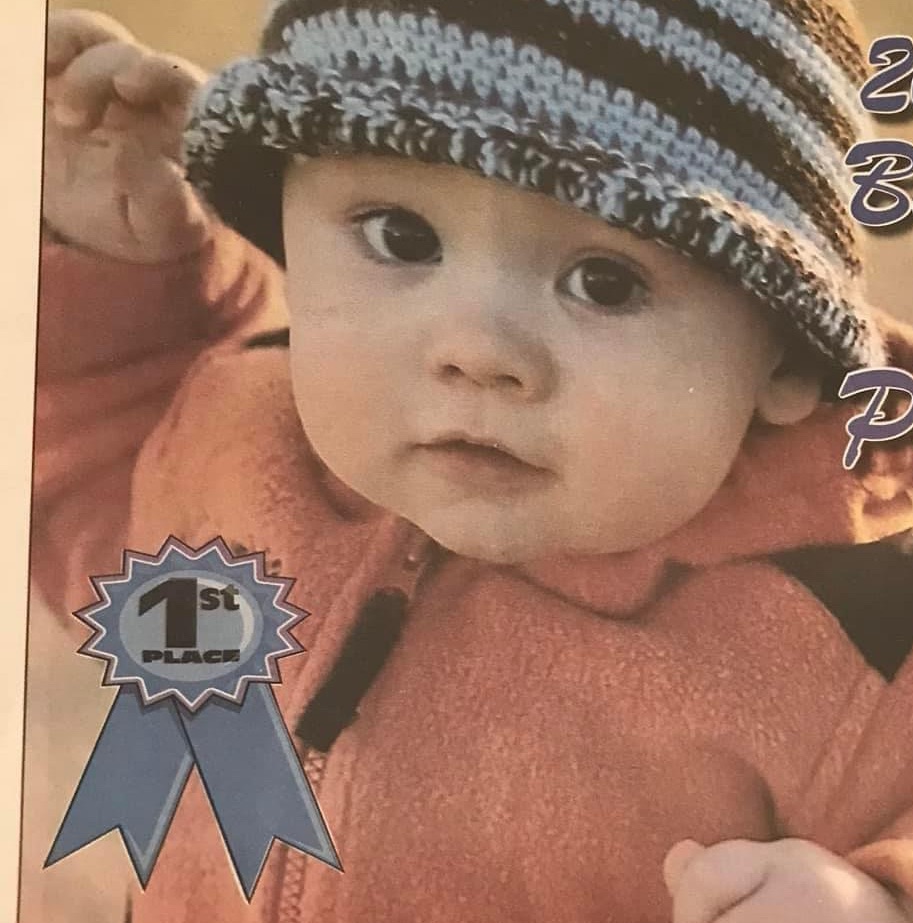
My award winning baby boy turned 16!

He did a lowkey cake and ice cream party with a few friends and then we had Spring Break.

The following week I went on a work trip to a conference in Nashville, TN.

It was fun and I always learn something new, but traveling is hard on my aging body.

With all those punches, it took every ounce of energy I had left to get this podcast episode ready to publish. I hope you enjoy it and here is just a teensy weensy bit about the episode…

Kim is someone I found recently on Quora. I feel her words are so accurate in explaining borderline personality disorder. Here is one of her quotes and I think you will also hear many other things that she shares with us within this interview that will resonate in those dealing w/BPD.

“I could see that I was living in a protective cocoon of imagination & daydreams to shield me from what I didn’t want to feel.”

I feel that her quote explains what a PwBPD experiences when in a dissociative state.

This episode is only part 1. Check in again in a few weeks for the rest of our conversation. God willing, I hear there is a solar eclipse scheduled for April 8th and the south eastern part of my state is scheduled to have the Army National Guard handling things. I also read that cicadas will be shooting up from underground in massive swarms. It should be interesting. I hope you all stay safe out there.

Thanks for your continued support .

Season 2: Episode 5 ‘Mirroring’ in BPD, with Special Guest Sarah Myles

Link to the podcast episode …

Season 2: Episode 5

Mirroring is one way people with BPD try to create bonds with interesting people they meet. This involuntary behavior is a result of a sincere desire to be accepted. Individuals that display ‘mirroring’ do so automatically. They are imitating individuals that have shown them desirable qualities. Since the Pw/BPD has a shattered sense of self, they can easily switch from whatever persona they were once displaying & easily switch to a new one. ‘Mirroring’ is a specific aspect of borderline that makes it difficult for a Pw/BPD to tell you what they like or dislike. Borderlines have a hard time making decisions or sticking to specific hairstyles, fashion trends, or genres of music. One reason most people with borderline use ‘mirroring’ to secure a bond with someone is to decrease the chance of being abandoned or rejected. This aspect of borderline is what Sarah refers to as the “Chameleon Effect.” Sarah Myles is a person I chose to interview about the topic of ‘mirroring.’ Sarah is a writer originally from London that now resides in North Yorkshire, England.

The link above will take you to the short piece Sarah Myles authored.

Reflecting

A poem I’ve written
about ‘mirroring.’

Mirrors can be tricky, don’t you think?

Sipping from a glass of truth but denying the drink.

Magically crafted so that we may truly SEE ourselves.

IMPROVE ourselves, or maybe even REMOVE ourselves?

I may have been crafted to show others who they are.

Most are unable to resist the hypnotizing charm.

Each one of us focused only on the things that we like.

Intertwined with this unintended slight,

I’m mastering the skill of being your type.

Life demands the borderline mirrors those that excite.

A demand they must adhere to for they fear the flight

Noticing all of these desirable traits

Each one of my behaviors begin to assimilate.

How easy it must be for my ‘looker’ to relate.

I submit myself to these effortless transformations.

No longer me, just various & interesting reflections.

Pieces of a broken slate of glass

My ‘self ‘ will always present itself last.

A painful instinctive reaction

I beg of you, do not leave me as just an empty reflection.

As I only believe, I am nothing without you.


I enjoyed my time immensely discussing borderline tendencies with Sarah Myles.
You can listen to our conversation here at the provided link.

Listen in for a better understanding of the “Chameleon Effect” & real life strategies to help with BPD.

Thank you, Sarah, for the opportunity to better understand the “Chameleon Effect” I look forward to future chats.

Season 2 Episode 4: Unconditional Love & Mental Health

How can we start curing our mental health disorders? I definitely feel like I am on to something with this general idea of love being the cure.

Listen to what I think about this… here! https://open.spotify.com/episode/6dLPzI6fymtnFEqhrivpW0?si=kidrE9zrR8arlt3f4HfmDw


The sad truth is that you can’t cure BPD with unconditional love. The problem isn’t that people with BPD don’t get enough love. The problem is that they feel such worthlessness and shame that they think they don’t deserve it. So your love encounters Teflon and slips away. But it’s difficult to face the worthlessness and shame and work on it, in therapy or out. All they know is they don’t feel loved, which means you must be doing something wrong.”

BPDCENTRAL.COM

Season 2 Episode 3: Interpersonal Sensitivity

Listen here … https://spotifyanchor-web.app.link/e/DMViY

In the previous episode, while speaking with our lovely guest, Imi Lo, she had mentioned… and I am paraphrasing here that people with borderline personality disorder & might possibly have an enhanced sensitivity when observing the slightest change in another person’s facial expressions, and that this sensitivity can be especially accurate when observing expressions showing negativity, and that this could mean that people with BPD may possess a higher level of interpersonal sensitivities.

What does that mean, higher interpersonal sensitivities?

I found a great explanation/definition from an article entitled “INTERPERSONAL SENSITIVITY: WHY IT IS SO IMPORTANT”
https://vbchange.com/interpersonal-sensitivity/
“Do you know when you can just tell that someone is in a bad mood just by their expression even if they have not said a word to indicate that they are in a bad mood? It’s the little things that give them away like their expression, that you are sensitively capturing. Or even if their expression is not betraying their current state, it could be the way that they are behaving, showing that they’re in survival mode. If it is someone you know well, then you can easily tell by their behavior having been altered from their usual behavior. How can noticing such things be useful and meaningful for us?

There are many non-verbal cues that we as humans can tend to give out to indicate the current emotional or mental state that we are in. Even if it’s a complete stranger, we can tend to pick up on subliminal hints through the way that they are acting, the words that they are speaking, the way that they are speaking, the tone they employ while speaking, the facial expression they have, among other non-verbal cues. In fact, body language accounts for 55% of communication between people.

You are able to tell a lot about a person you’ve just met, given that you are paying attention to all of these cues being presented by that person, whether they are doing it intentionally or unintentionally. The ability to correctly assess and understand information about them without having been directly presented with it is a little concept (it’s actually quite a big concept) known as Interpersonal Sensitivity.”

I feel I do this so much and without even thinking about it… & then I will react to certain facial expressions… the good, the bad, but mostly the ugly. I’m not talking about how you look on the outside, but those menacing expressions that come from deep within… those real feelings that the other person being observed had been unsuccessful at hiding, you even know they were trying to suppress their real feelings in hopes not to upset you. That sentiment doesn’t matter, because their slightest change has already upset you and aggravated your intense sensitivities.

Photo by Karolina Grabowska on Pexels.com

This dance gets exhausting, even though it always happens automatically for the borderline. It is a quick & primary go-to defense mechanism that the subconscious has learned to use when others are displeased with us. I’ve been reading facial expressions for a long time now and even though I think I’m good at it. I will never get it right 100% of the time, why? I think being sensitive in this way simply means you are still living life in survival mode instead of living life.

To be completely transparent, I’ve been trusting my feelings more about what I observe in others. Really leaning into this to see what it really is. I’m sure I’m driving my husband crazy with it, because I’m not the type to observe something negative from someone and then just let it go. To top it all off, I’m leaning into this at the same time we are dealing with a highly stressful situation. Remodeling our burnt home back to something better, even though we had just finished remodeling nearly the entire house.

For me personally, from the viewpoint of a 40-year-old, “Textbook” BPD female, it can mean that having high interpersonal sensitivities or abilities mean that you could very well still be living in survival mode. If you are currently more worried about not upsetting your environment, or the people in it, & you find it necessary to please everyone in it… You are living in survival mode. You likely haven’t begun to see that your environment is unsteady because you are still relying on others to be the support for you that you feel you are to them. The reason we (people with BPD) are highly reactive to any displeasure shown by those in our environment, it shows a disapproval of our tireless attempts at maintaining a copesetic environment. We take on that role and feel very hurt if someone is unappreciative of all of the work, we have done behind the scenes to keep others happy. At the very least we hope to keep the peace, this always has a tendency to slap us in the face.

A person w/BPD can be triggered by the slightest negative change in facial expression or tone. We have become excellent at interpreting the unspoken human language. Our mind tells us who we can likely trust, and who is valuable for our survival. The slightest change in another person’s normal reaction, can affect a person with BPD so much, that often times they can automatically go into a defensive mode, either to protect themselves or to fight against their biggest fear, which is being abandoned for one reason and that reason in their BPD mind is that they weren’t “good enough” or that they didn’t “do enough” I am not certain that every person that has BPD deals with the fear of abandonment, but in my life it has created many moments of regret.

Byte of Insight – unscripted, have a listen…

Announcements – Still rebuilding after the fire, bringing a lot of inconveniences and next episode, April 3rd.

Byte of Insight – unscripted, have a listen to the episode.

“Unconditional love is the outer expression of inner peace”

Alaric Hutchinson


I realize now that most of the people in my life have had transactional love from me not unconditional love. I was asking them to have the same type of love for me, for myself. show me this feeling you have for me by some tangible transaction. Show me that I am worthy of your time and attention. I know now that unconditional love doesn’t require this of anyone. You are loved for who you are, not for what you aren’t. I have worn myself out entirely being transactional in the past. To my lack of understanding relationships, I can now blame my upbringing and romantic movies. To continue to exist in that way though would be by choice and I don’t choose to love transactionally. I choose to love unconditionally.

Have a wonderful day and don’t forget to choose truth, goodness, and LOVE!