Season 2: Episode 7 – “The Borderline’s Garden”

PODCAST LINK: https://open.spotify.com/episode/0bCrBZ25jGURp36yykT0ut?si=rlLOoiMxRjSEIf-q5O1Xcw

    We have been dealing with a lot over in our neck of the woods, my absence is mostly related to my brief summer break from teaching and well that just translates into a break from routine.  During this break from “root-ine”, I started to realize just how frequently my mind is busy generating thoughts and how those thoughts quickly blossom into feelings. Those feelings then ultimately direct my actions. This realization made me aware of the negative thoughts I was allowing to grow, and well that is where "A Borderline's Garden" originated from. 
Well, here we go, I am glad you are here to listen. Let me know what you think & please comment if you are inspired to share your thoughts with this Ol' gardener.

It always starts out so small, a tiny seed that gets planted in my grandiose garden of thoughts. The place where all thoughts are nurtured before blooming into actual real feelings & behaviors. My negative thoughts are the most durable of seeds. They also grow into the most stubborn of weeds. Each durable seed collected during childhood. Nurtured by every crisis event of my youth. Now as an adult, I can spot the full-grown mess of stubborn weeds. Monsters really, glaring at me from time to time. Taunting me with their incessant noises, consistently spewing reminders of my past failures and only encouraging my insecurities to blossom. Even though I can identify the root of my problems now, I’m often feel too vulnerable or too emotionally immature to handle the task, the job of removing the stubborn weeds that had been planted before I became aware of the delicate state of my overgrown thought garden.
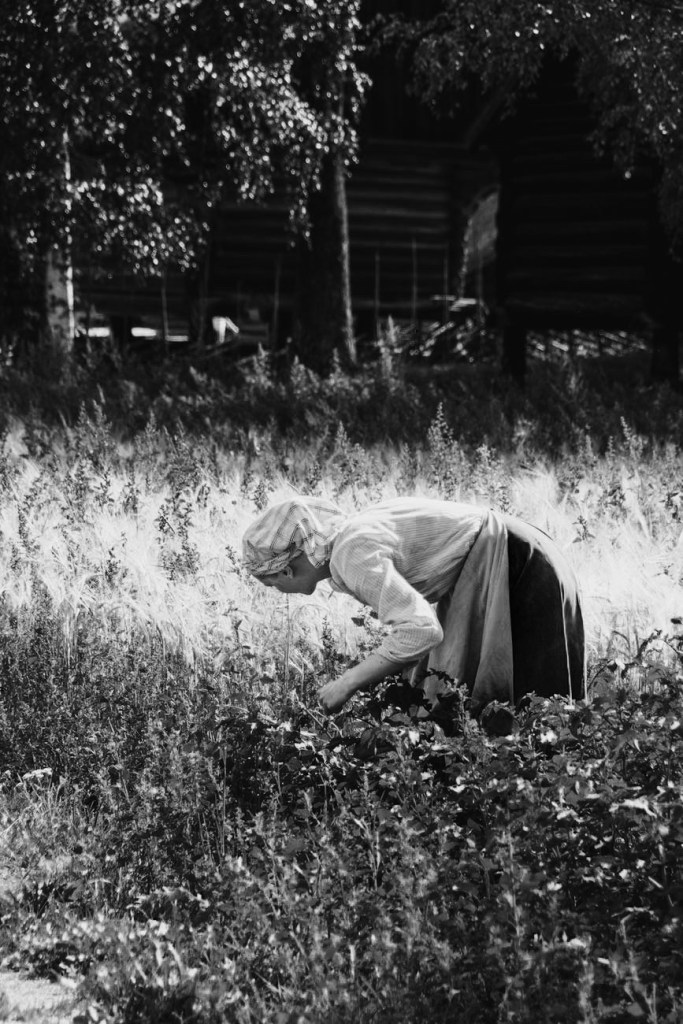
Are there any good things planted here?

I drifted off to sleep after working on this post. I’ve been working on this one post over the last few months. For whatever reason, this work let my pre-slumber positive mindset fall directly into a nightmare. I woke quickly around 4am, clammy, bothered & unable to fall back to sleep. This nightmare made me question a lot of things about myself. I laid there in silence, heart & mind racing, eyes unable to focus, mouth dry, covered by the cool darkness, my mind tossing about several conflicting thought seeds. Normally, I would have started crying and rolled over to ask my husband to provide some sort of comfort for me. This morning though, my reaction was a little different, I was able to calm myself without his help just by eliminating the terrible thoughts and focusing on the actual situation.

Photo by Ivan Bertolazzi ol Pexels.com

First, I began to question the origin of each feeling. I knew that everything I was feeling had just sprouted up from this bad dream. Could these thoughts have originated from my subconscious or were they from some darker place within my vast thought garden, a place I tend to visit too often, that place called paranoia? I knew I could test the validity of each thought. What are the test standards? – If it lowers my frequency or lessens my energy, the seed should not be planted. If it leads to truth and love, the seed can remain in my garden. I knew that a few specific bad seeds had already been planted, based solely on the developing insecurities the nightmare had encouraged. My insecurities are not founded in reality, rather based solely on my feelings. I can be in a loving relationship and still feel unloved and undesirable. I compare myself to other females nearly every day. If I am not as physically strong as them, then I feel weak. If I am not as pretty as them, then I feel disgusting. There is no middle ground for the mind of a borderline. It either is or isn’t. This black and white thinking is destructive and leaves very little room for grace. The battle of sticking to the truths of who I am remains most of where my struggles lie, and why this is such a serious disorder. Nothing is certain, and when everything is based on how I feel my entire concept of reality shifts from moment to moment. I should have thrown those seeds out long ago, but I didn’t know what I was doing. A novice thought gardener back then, those negative seeds grew into stubborn weeds, nothing good.

How could these small little thought seeds grow into such enormous monsters? They do at times confuse and scare me, but I don’t want them completely taking over my thought garden. The bad seeds feed on my fear like it’s some type of miracle grow. This fertilizer or “insecurity shit” it transforms the smallest of negative thoughts into these full-blown nightmares, only the type experienced in real life.

Photo by Meruyert Gonullu on Pexels.com OLHBD

I know I’ve not been the best kind of thought gardener; I just toss out every kind of seed without identifying whether I want it planted in my garden or not. I am guilty of thinking too much! My thought garden now vast & just like in real gardens, there is a ton of work to do. The weeds (my negative thoughts) show up in my garden randomly and frequently. They require no help to go from destructive thoughts to insecure feelings, they just suddenly appear and then I suddenly feel “less than”. The moment I notice these monsters in my garden, they begin extracting unusual powers from my insecurities, As the weeds settle in and begin to establish roots, they also simultaneously begin to construct catastrophic stories that my negative thoughts affirm will be my future reality. This experience must happen for all bad thought gardeners… Giving into the weeds, because we didn’t know how to nurture the proper seeds.

I’ve been trying a peculiar method these days. Be the gardener with a green thumb, protect and nurture the good seeds the ones you are responsible for and throw the rest away. Armed now with the knowledge that you must only tend to the garden you decide to plant, have planted, and will plant. Be a wise gardener. Identify your seed, provide an environment where it will grow best, be aware of what you have already planted so you learn what you should plant each season. * Tip: If good things can’t grow in your environment, change what you can control of that environment.

This will not be some quick and easy fix for managing “The Borderline’s Garden” and each may still get caught up in the weeds. I know this fact personally, as I still have terribly low days, like the one I experienced just a few days ago… but being armed with this truth helps me dig my way back up towards the sunshine. I welcome the warmth of the sunshine and the embrace it brings to my soul.

For the individuals that live with BPD, we know the intensity of sorting through our numerous thoughts. Our minds busy generating various types of thought seeds all day! Our mind’s motivation for this overproduction of thoughts is our never-ending desire to satisfy our constant yearning of one thing, to “feel” loved. The mind offering only the familiar sad justifications, listing reasons why you will never be good enough & that you should never believe that anyone will stay. The stubborn weeds you have left unmanaged for so long, now great at reminding your psyche that everyone eventually abandons you. Remove those monsters, they will never produce anything good.

Listening to the utterances of these monsters repeatedly, leads to a certain type of thinking, “I am not good enough, I’m not fun enough, I’m not witty enough to maintain the attention I crave from anyone anymore… if I don’t have this desired attention, then I do not have love. If I do not have love then I will be left alone. Unloved & abandoned, two of my greatest fears married together to successfully tackle one objective… Destroy any & all joy.

The truth is each person ultimately gets to decide what will grow best in their grandiose gardens. You can either ignore the weeds until they take over or you can address each thought seed upon arrival, be diligent in protecting your precious garden of thoughts.

Announcements!!!! (Next Episode Info!)

All I have been seeking lately is some reassurance that I am enough.

Someone without knowledge of how BPD affects the individuals that battle it, would never know the seriousness of this disorder. They wouldn’t know the seriousness of mine, unless of course I bring them into my inner circle. There aren’t many people there, and I am probably overreaching by referring to it as a circle. I don’t even have enough people in it to make a circle, it’s my inner semi-circle. I mask it well, my loneliness. My deeply planted insecurities are pretty well hidden from the outside world. I know that I have the ability to hide it when I need to, but moments like last night make it impossible for me to keep those ugly monsters completely locked away. So instead of locking them up inside my thought garden, I have decided to do the hard job of cleaning up the mess of overgrown weeds and getting back to tending to my more positive thoughts. Tending to my thought garden.

I finished this blogpost and discovered a little bit more. The nightmare was sent to apparently convey a message. After thinking about the dream all day, realizing that I was constantly worried about being abandoned that I was on my way to securing that as my future. It was as if while sleeping I had been visited by the “Ghost of Christmas Future.” He drew the connections to the time I had lost my faith in love during my youth & what I had been seeking to replace that lost faith, maybe I was seeking a lust for romance and adoration. Understanding that connection led me to more questions… If God is love, had I lost my faith in God? Have I been actively rejecting love, choosing only to survive? Choosing list and romance and adoration over love. I know now that if I want to live, and not just remain in survival mode, I must learn to love myself & others, showing each and every individual grace, acceptance and understanding. By rejecting love to self, I had been earnestly working towards securing a future of loneliness. It is a reassuring thought that we are never alone, and I pray that no one is ever without love! God Bless!

For more information or useful strategies, listen to my previous podcast episodes or check out other blogs by individuals with BPD that understand it is a constant struggle, and wake up each day ready to continue the fight… Maybe you could even start writing your own blog.

After wrestling around with all the thoughts that it took for me to produce this piece, the Bible verse that came to me was (plfff!) 1 Corinthians 13:6. The actual verse that talks about love starts on 13:4

Love is patient. Love is kind. It does not envy. It does not boast. It is not proud. It does not dishonor others. It is not self-seeking. It is not easily angered. It keeps no record of wrongs…

Let those beautiful blossoms bloom!

Take a break you deserve it!
* Next episode I am hoping to have Sarah back on with me. We briefly discussed what we would like our chat to be about and I just love collaborating with her. Please check back next month for Season 2: Episode 8.


Season 2: Episode 5 ‘Mirroring’ in BPD, with Special Guest Sarah Myles

Link to the podcast episode …

Season 2: Episode 5

Mirroring is one way people with BPD try to create bonds with interesting people they meet. This involuntary behavior is a result of a sincere desire to be accepted. Individuals that display ‘mirroring’ do so automatically. They are imitating individuals that have shown them desirable qualities. Since the Pw/BPD has a shattered sense of self, they can easily switch from whatever persona they were once displaying & easily switch to a new one. ‘Mirroring’ is a specific aspect of borderline that makes it difficult for a Pw/BPD to tell you what they like or dislike. Borderlines have a hard time making decisions or sticking to specific hairstyles, fashion trends, or genres of music. One reason most people with borderline use ‘mirroring’ to secure a bond with someone is to decrease the chance of being abandoned or rejected. This aspect of borderline is what Sarah refers to as the “Chameleon Effect.” Sarah Myles is a person I chose to interview about the topic of ‘mirroring.’ Sarah is a writer originally from London that now resides in North Yorkshire, England.

The link above will take you to the short piece Sarah Myles authored.

Reflecting

A poem I’ve written
about ‘mirroring.’

Mirrors can be tricky, don’t you think?

Sipping from a glass of truth but denying the drink.

Magically crafted so that we may truly SEE ourselves.

IMPROVE ourselves, or maybe even REMOVE ourselves?

I may have been crafted to show others who they are.

Most are unable to resist the hypnotizing charm.

Each one of us focused only on the things that we like.

Intertwined with this unintended slight,

I’m mastering the skill of being your type.

Life demands the borderline mirrors those that excite.

A demand they must adhere to for they fear the flight

Noticing all of these desirable traits

Each one of my behaviors begin to assimilate.

How easy it must be for my ‘looker’ to relate.

I submit myself to these effortless transformations.

No longer me, just various & interesting reflections.

Pieces of a broken slate of glass

My ‘self ‘ will always present itself last.

A painful instinctive reaction

I beg of you, do not leave me as just an empty reflection.

As I only believe, I am nothing without you.


I enjoyed my time immensely discussing borderline tendencies with Sarah Myles.
You can listen to our conversation here at the provided link.

Listen in for a better understanding of the “Chameleon Effect” & real life strategies to help with BPD.

Thank you, Sarah, for the opportunity to better understand the “Chameleon Effect” I look forward to future chats.

Season 2 Episode 4: Unconditional Love & Mental Health

How can we start curing our mental health disorders? I definitely feel like I am on to something with this general idea of love being the cure.

Listen to what I think about this… here! https://open.spotify.com/episode/6dLPzI6fymtnFEqhrivpW0?si=kidrE9zrR8arlt3f4HfmDw


The sad truth is that you can’t cure BPD with unconditional love. The problem isn’t that people with BPD don’t get enough love. The problem is that they feel such worthlessness and shame that they think they don’t deserve it. So your love encounters Teflon and slips away. But it’s difficult to face the worthlessness and shame and work on it, in therapy or out. All they know is they don’t feel loved, which means you must be doing something wrong.”

BPDCENTRAL.COM

Season 2 Episode 3: Interpersonal Sensitivity

Listen here … https://spotifyanchor-web.app.link/e/DMViY

In the previous episode, while speaking with our lovely guest, Imi Lo, she had mentioned… and I am paraphrasing here that people with borderline personality disorder & might possibly have an enhanced sensitivity when observing the slightest change in another person’s facial expressions, and that this sensitivity can be especially accurate when observing expressions showing negativity, and that this could mean that people with BPD may possess a higher level of interpersonal sensitivities.

What does that mean, higher interpersonal sensitivities?

I found a great explanation/definition from an article entitled “INTERPERSONAL SENSITIVITY: WHY IT IS SO IMPORTANT”
https://vbchange.com/interpersonal-sensitivity/
“Do you know when you can just tell that someone is in a bad mood just by their expression even if they have not said a word to indicate that they are in a bad mood? It’s the little things that give them away like their expression, that you are sensitively capturing. Or even if their expression is not betraying their current state, it could be the way that they are behaving, showing that they’re in survival mode. If it is someone you know well, then you can easily tell by their behavior having been altered from their usual behavior. How can noticing such things be useful and meaningful for us?

There are many non-verbal cues that we as humans can tend to give out to indicate the current emotional or mental state that we are in. Even if it’s a complete stranger, we can tend to pick up on subliminal hints through the way that they are acting, the words that they are speaking, the way that they are speaking, the tone they employ while speaking, the facial expression they have, among other non-verbal cues. In fact, body language accounts for 55% of communication between people.

You are able to tell a lot about a person you’ve just met, given that you are paying attention to all of these cues being presented by that person, whether they are doing it intentionally or unintentionally. The ability to correctly assess and understand information about them without having been directly presented with it is a little concept (it’s actually quite a big concept) known as Interpersonal Sensitivity.”

I feel I do this so much and without even thinking about it… & then I will react to certain facial expressions… the good, the bad, but mostly the ugly. I’m not talking about how you look on the outside, but those menacing expressions that come from deep within… those real feelings that the other person being observed had been unsuccessful at hiding, you even know they were trying to suppress their real feelings in hopes not to upset you. That sentiment doesn’t matter, because their slightest change has already upset you and aggravated your intense sensitivities.

Photo by Karolina Grabowska on Pexels.com

This dance gets exhausting, even though it always happens automatically for the borderline. It is a quick & primary go-to defense mechanism that the subconscious has learned to use when others are displeased with us. I’ve been reading facial expressions for a long time now and even though I think I’m good at it. I will never get it right 100% of the time, why? I think being sensitive in this way simply means you are still living life in survival mode instead of living life.

To be completely transparent, I’ve been trusting my feelings more about what I observe in others. Really leaning into this to see what it really is. I’m sure I’m driving my husband crazy with it, because I’m not the type to observe something negative from someone and then just let it go. To top it all off, I’m leaning into this at the same time we are dealing with a highly stressful situation. Remodeling our burnt home back to something better, even though we had just finished remodeling nearly the entire house.

For me personally, from the viewpoint of a 40-year-old, “Textbook” BPD female, it can mean that having high interpersonal sensitivities or abilities mean that you could very well still be living in survival mode. If you are currently more worried about not upsetting your environment, or the people in it, & you find it necessary to please everyone in it… You are living in survival mode. You likely haven’t begun to see that your environment is unsteady because you are still relying on others to be the support for you that you feel you are to them. The reason we (people with BPD) are highly reactive to any displeasure shown by those in our environment, it shows a disapproval of our tireless attempts at maintaining a copesetic environment. We take on that role and feel very hurt if someone is unappreciative of all of the work, we have done behind the scenes to keep others happy. At the very least we hope to keep the peace, this always has a tendency to slap us in the face.

A person w/BPD can be triggered by the slightest negative change in facial expression or tone. We have become excellent at interpreting the unspoken human language. Our mind tells us who we can likely trust, and who is valuable for our survival. The slightest change in another person’s normal reaction, can affect a person with BPD so much, that often times they can automatically go into a defensive mode, either to protect themselves or to fight against their biggest fear, which is being abandoned for one reason and that reason in their BPD mind is that they weren’t “good enough” or that they didn’t “do enough” I am not certain that every person that has BPD deals with the fear of abandonment, but in my life it has created many moments of regret.

Byte of Insight – unscripted, have a listen…

Announcements – Still rebuilding after the fire, bringing a lot of inconveniences and next episode, April 3rd.

Byte of Insight – unscripted, have a listen to the episode.

“Unconditional love is the outer expression of inner peace”

Alaric Hutchinson


I realize now that most of the people in my life have had transactional love from me not unconditional love. I was asking them to have the same type of love for me, for myself. show me this feeling you have for me by some tangible transaction. Show me that I am worthy of your time and attention. I know now that unconditional love doesn’t require this of anyone. You are loved for who you are, not for what you aren’t. I have worn myself out entirely being transactional in the past. To my lack of understanding relationships, I can now blame my upbringing and romantic movies. To continue to exist in that way though would be by choice and I don’t choose to love transactionally. I choose to love unconditionally.

Have a wonderful day and don’t forget to choose truth, goodness, and LOVE!

Season 1: Episode 7

Self-Awareness

Link to listen to the podcast: 

Intro: 

         Hello and welcome to “The World in Black and White”My name is Michelle and I’m the narrator and creator of this podcast.


Vision for the podcast:

My vision for this podcast is that it will bring hope to all individuals that may be overwhelmed by the challenges mental illness can create.

Announcements: (none)

Topic:  (SELF-AWARENESS)

Alright…  Welcome back everyone, this is episode 7 of the first season of The World in Black & White!  I am going to try and knock out 11 episodes total, for Season 1 before the start of 2023, so wish me luck!

This week’s topic is very near and dear to my heart, SELF-AWARENESS!

I don’t know the percentage of Borderlines that deal with this issue, but I am sure it is high. 

 If I were put on the spot to give 100% honesty on whether or not I liked something I would respond with a neutral type of response, still being unsure of what the appropriate answer might be for the given situation or I’d be worried about the response the person asking me the question is seeking. I’d probably just say “umm sure, it’s good” 
For starters, I do not like to offend but the closer I steer towards being authentic and honest, the more I realize that there will be times where my wants and needs may not be the same as others, and that my opinions and beliefs may not match their beliefs.I just need to remind myself that this doesn’t make me offensive. (because In my head, offensive people aren’t well liked.)  and because well, answering with an agreeable answer is less troublesome. 

but I have found that the moments where I have abandoned my opinions, beliefs or values to be agreeable for someone or something are also the initial moments that create conflict in my life. I know now that I must redirect my responses towards honesty and steer clear of always being agreeable. 

This amnesia of self may be one of the most destructive behavior patterns for PwBPD. 

I have made a lot of progress by bringing my focus on being present, really tuning in, consistently seeking my inner voice, and presenting the truth to others about the thoughts that are awakened or my true feelings when situations needing my input may arise. //

CRISIS HELPLINE:
  I would also like to let listeners know of help that is available.  Call one of these numbers or text them to find help.  I pray you always find someone there to pull you up.   

You can call or text 988.

Another helpline available through the National Alliance for Mental Illness is 800-950-6264 or text “HelpLine” to 62640


Are you able to make good decisions in a timely manner, or do you waver a bunch and say “well what do you want to do? Or what do you think we should do?”

I always thought this behavior pattern of mine to be a considerate personality trait. I was offering the decision to be made by someone else, to give them an opportunity to experience any level of joy out of that decision.  But in doing so, I have lost the ability to make my own decisions based on what I truly think or believe.  However; I think one of the only times we aren’t indecisive is when something causes us to “feel”. I am curious to find out if this need to “feel” happens because so many people with BPD actually function in their own lives  in a numb and apathetic way.It appears we have discovered some kind of mental switch for autopilot. 

However; this default in my brain to avoid making decisions for myself stems from my inability to see who I really am and what I really want.  This also leaves me with the inability to be decisive.  I rely on many other people to help me make good decisions. Why should I trust others and their decision-making over my own?

Well, I think that’s a good question!. I think I have stumbled upon something that will help us understand a little bit better why people with BPD have such a hard time with self awareness and understanding who they are, what they think ,and what their beliefs are//

BYTE of Insight:
Lately, I have been struggling a ton with not being able to see myself.  I don’t mean I need to buy glasses or clean my bathroom mirror.  I mean, I’ve noticed that I’m lacking in the area of self awareness and understanding my own identity. I am working at getting a better understanding of all the things that make me, me.

This may sound silly to some listeners but I do believe that this is a big issue for someone battling textbook BPD.

Not having the slightest clue of how others see you may directly berelated to that inability to see/know/or understand myself.  

I bet if you have BPD you are bothered by this just as much as I am.  

We have already learned that splitting occurs, as well as other unhealthy defense mechanisms when the PwBPD is threatened and that this happens on a subconscious level. 

I am now constantly telling myself, there is no threat Michelle.  Or reminding my brain that everything is ok, because I don’t want some unhealthy defense mechanism hijacking my mind or my behaviors.//

STUDY OVER SELF:  Alright what I’m about to read is an abstract from a study
Link:

Mentalization and embodied selfhood in Borderline Personality Disorder – PMC (nih.gov)

ABSTRACT:  Aberrations of self-experience are considered a core feature of Borderline Personality Disorder (BPD). While prominent etiologic accounts of BPD, such as the mentalization based approach, appeal to the developmental constitution of self in early infant-caregiver environments, they often rely on a conception of self that is not explicitly articulated. Moreover, self-experience in BPD is often theorized at the level of narrative identity, thus minimizing the role of embodied experience. In this article, we present the hypothesis that disordered self and interpersonal functioning in BPD result, in part, from impairments in “embodied mentalization,” that manifest foundationally as alterations in minimal embodied selfhood, i.e. the first-person experience of being an individuated embodied subject. This account of BPD, which engages early intersubjective experiences has the potential to integrate phenomenological, developmental, and symptomatic findings in BPD, and is consistent with contemporary theories of brain function.

“disturbances in self and other mental representations are fundamental to borderline psychopathology” (p.514). Similarly, Kerr et al. (Kerr et al., 2015) calls for a “reconceptualization” of BPD as “a disorder of self and relationality” (p.346). Interpersonal symptoms can include confusion about self-other boundaries with identity diffusion, projection of difficult affects onto interaction partners. One person with BPD evokes a bodily experience of this confusion (italics added):

(So this is from one person and what they have said but it hit me 100%!)

When I’m around other people, I can feel their energy. I can feel whether they’re happy or unhappy. I can walk into a room and feel whether there’s tension in the air or if everyone is getting along… Having my own identity issues makes it even harder to be around certain people. I feel other people’s emotions so strongly that sometimes, I believe they are my own (Mae, 2017).


PLANS For Next Episode:  
So I am thinking I will go further into this study and talk about it more on the next episode, one of the last things they talked about in the study is that while bpd
“ remains in current classification systems and can be reliably diagnosed. A considerable body of research on self and BPD has accrued, including a recent profusion and confluence of neuroscientific and socio psychological findings. These have generated supporting evidence for a supra-ordinate, functionally constituted entity of the self ranging over multiple, interacting levels from an unconscious, ‘core’ self, through to a reflective, phenotypic, ‘idiographic’ and relational self constituted by interpersonal and sociocultural experience.

  I am listening to many people that have been diagnosed with BPD on reddit and other websites that focus on psychology or mental health.  I ventured to one site called themighty.com and found an interesting article entitled “25 PEOPLE SHARE THE WORST SYMPTOMS OF BORDERLINE PERSONALITY DISORDER”


One of the responses from James said that his worst symptom was this…

“No sense of self. I went through so many majors in college and I am constantly second guessing myself. Do I really want to do this with my life? What about this instead? This looks better let’s do this. It’s tiring for myself and everyone around me. I’ll finally settle on something and then something better will come along and I jump ship.”(quote from Themighty.com)

I believe people that are highly sensitive to their environment look externally for the correct response, because we were the ones to keep environments from becoming too chaotic during important moments of development.  We weren’t given appropriate space and time to figure out the things we like/dislike, or what we really feel.  We were more than likely always told how to feel, or “to get over it!” 

Challenge:

The challenge that I would like to put out for this week is to use TRUTH as much as possible, rely on yourself to make those decisions, stay present, focus on listening to yourself,  make a list if you have too.  But the challenge is to be honest about what you want, and what you need.  And I think that is a good challenge for this week and I think it will pull you to a better place of SELF AWARENESS.

CLOSING:  Thanks so much for tuning in… We have come to the end of the podcast. What did you learn? Who can you share this podcast with? If this resonates with your spirit or makes you think of a certain someone that has experienced similar issues in their life, please share this with them.  I believe mental health is something we are overlooking on a massive scale, and in order for people to heal we need to be able to speak about this openly and honestly.

…Until next time… Choose truth, goodness and love Closing: