We interview Jennifer Dolezal. An inspiring friend of mine that has overcome the crippling grips of postpartum depression and how changing her mindset has been key in finding and pursuing her true calling.
Take a listen to all she has to say about this.
I will warn you to start with the volume down then crank it up to your desired level. My audio equipment is not great right now, my apologies.
Guest on The World in Black & White Podcast, Jennifer Dolezal
Jennifer has said numerous times to me that she is here to help other women that deal with this issue. Please feel free to post questions or reach out for further comments about how she chooses to manage her battle with anxiety and depression.
Have a great day, and remember to choose truth, goodness and love.
I found this question on Quora and wanted to post it here as well as I haven’t felt like doing much blog writing or podcast creating lately. I have been absolutely exhausted from rebuilding our house after the house fire from nearly a year ago and holding down my job as an adult ed teacher. SO here it is… I am back and the next podcast will be up sometime this month. Promise, it will be an interview and I am excited to have this guest and know you will gain something from that episode, so be looking for that in the next couple of weeks.
Signs of borderline personality disorder include various behaviors, ranging from excellent to despicable. The PwBPD develops toxic but effective methods to alleviate emotional pain and may develop bad habits within this processing of stimuli. I believe that most of what the BPD will display are simply their own bag of coping mechanisms and overuse of these mechanisms establish their defective behaviors. I will point out some of the coping mechanisms I have dealt with personally.
I believe that most PwBPD are experts at hiding their true selves, (a learned behavior driven by fear, we can’t be ourselves because being ourselves wasn’t effective at keeping those people we desperately needed to remain in our lives.) So, the PwBPD becomes the human chameleon. The PwBPD is certain that changing who they are in order to be more pleasing to the people they need and hopes that it will remedy the pain of not FEELING loved or wanted. The PwBPD could possibly learn that the pain of not being loved never subsides but continues to exist with extreme peaks and valleys. The person dealing with BPD knows that it is less important for them to show their own preferences than to gain the FEELING of being loved/wanted. You might even observe a PwBPD by their unique ability to blend easily into any situation or peer group. Sign number 1, the person will be a talented actor within their roles. The sad fact is most people living with this disorder have no idea that they do this. They are quite literally existing in survival mode. If you know a people pleaser, you might know someone with borderline. Either way, this is a sign and can become a habitual response to external stimuli.
I believe the second sign, that not a lot of people discuss and a major problem in my life, is having a terrible memory, whether long or short-term. I am barely able to recall any memories from my childhood. The memories I am able to recall vividly are highlights of traumatic events that produced some sort of pain or agony for me. The good moments never seemed to make it to my personal memory timeline. I have to work very hard now & focus on maintaining mindfulness throughout my day and try to attach a feeling with the moments I hope to remember. The piece I stumbled upon said that the mind of the PwBPD is controlled by the emotional center. That if you want to memorize/remember something, make sure it makes you FEEL something, otherwise you will let it go and forget it almost instantly.
Sign number 3, A PwBPD is equipped with the ability to hyperfocus on the minute details of the emotional state of those they are closest to. A PwBPD may perceive it wrong at times, but this is on super rare occasions. This is mostly due to living so much of their lives in survival mode. A good hunter can spot game, an expert hunter can detect their prey’s movements and habits and make it a good spot to take out their prey before it knows what hit it. A PwBPD will do this with almost everyone & does so with little to no effort. They don’t do this to actually “take out” the people they are closest too, but to detect those that are unwilling to be there for them. Hunting for emotional pain relief.
A PwBPD knows how to survive chaos, and when things are too good it makes them overly anxious. They lie in wait for the shit to hit the fan. If things are good and they are triggered, they will create the familiar chaos they know they can survive. This ensures that a PwBPD will display patterns, most often these patterns play out without the borderline even being aware of it. It is their natural response to external stimuli. Sign number 4, they conceal their disorder by creating chaotic environments/situations.
A PwBPD also struggles with controlling impulsive behaviors. They are the most likely person to agree to those spontaneous adventures, going on a shopping spree even if they only have -$45 in their account, & turning to any kind of addiction.
Physical signs that a person could be dealing with borderline personality disorder… obvious attention seeking, becomes very needy of the person they FEEL abandoned by, self-harm (I would say this may include but is not limited to cutting, picking the skin, nail-biting to extreme, negative self-talk, isolation, tattoos, eating disorders, and other risky behaviors.)
A PwBPD may be unaware that they are being self-destructive. I know that people with BPD have a reputation of being these ruthless heartbreakers, hell bent on collecting as much pain from others as possible… I don’t believe this to be true at all. We are trying to exist in a world that has been successful at making us perpetually feel unwanted & unloved. We are capable of hurting ourselves & we will do this much more frequently than hurting someone else. I am not saying that we won’t hurt those we are closest to on our search for pain relief. The need that shows up is, “I hate FEELING like this… I need to FEEL better.” This means you should probably prepare yourself for the toxic coping mechanisms that are about to arrive like an unexpected house guest. I will say in defense of those dealing with BPD, we don’t want to hurt anyone, but we will if given the proper stage to do so. If you have chosen to be in a relationship with someone that has borderline personality disorder, you have to remember a person that has BPD has two perspectives. One perspective is “all in” the other perspective is “all out”. These perspectives are determined by the interaction you choose to have with the PwBPD. So be careful of how you interact with a borderline especially if they are fully engaged in seeking pain relief. I do know that this search for emotional pain relief happens almost automatically for the PwBPD. We can switch off the logic center (coping mechanism) and turn on the emotional center of the brain (coping mechanism) without blinking an eye.
I was in my late 30’s before I was diagnosed. I have been diligently seeking relief in the form of collecting information on this topic for 7 years. I have found that consistent workouts (kickboxing) help me with my many aspects of this disorder. I write and write and write, especially on days I feel the most misunderstood. I seek quiet by listening to music. We live in a state of “FEELING” too much so there are moments where numbness becomes what we hope to achieve. Lately, I have been trying to name the things I feel. Most of the time when I find myself in emotional pain, it is because I am overly stressed or feel like my needs are not being noticed or even considered. I hope this has been helpful.
These viewpoints are my own, based off of my own personal experience and things I have read along the way. I am a real human being; I write to provide relief and a better understanding of this disorder for anyone suffering from borderline personality disorder. My hope is that we learn about what creates this disorder so that some day we can find a lasting remedy.
Hello and welcome to “The World in Black and White”My name is Michelle and I’m the narrator and creator of this podcast.
Vision for the podcast:
My vision for this podcast is that it will bring hope to all individuals that may be overwhelmed by the challenges mental illness can create.
Announcements: (none)
Topic: (SELF-AWARENESS)
Alright… Welcome back everyone, this is episode 7 of the first season of The World in Black & White! I am going to try and knock out 11 episodes total, for Season 1 before the start of 2023, so wish me luck!
This week’s topic is very near and dear to my heart, SELF-AWARENESS!
I don’t know the percentage of Borderlines that deal with this issue, but I am sure it is high.
If I were put on the spot to give 100% honesty on whether or not I liked something I would respond with a neutral type of response, still being unsure of what the appropriate answer might be for the given situation or I’d be worried about the response the person asking me the question is seeking. I’d probably just say “umm sure, it’s good” For starters, I do not like to offend but the closer I steer towards being authentic and honest, the more I realize that there will be times where my wants and needs may not be the same as others, and that my opinions and beliefs may not match their beliefs.I just need to remind myself that this doesn’t make me offensive. (because In my head, offensive people aren’t well liked.) and because well, answering with an agreeable answer is less troublesome.
but I have found that the moments where I have abandoned my opinions, beliefs or values to be agreeable for someone or something are also the initial moments that create conflict in my life. I know now that I must redirect my responses towards honesty and steer clear of always being agreeable.
This amnesia of self may be one of the most destructive behavior patterns for PwBPD.
I have made a lot of progress by bringing my focus on being present, really tuning in, consistently seeking my inner voice, and presenting the truth to others about the thoughts that are awakened or my true feelings when situations needing my input may arise. //
CRISIS HELPLINE: I would also like to let listeners know of help that is available. Call one of these numbers or text them to find help. I pray you always find someone there to pull you up.
You can call or text 988.
Another helpline available through the National Alliance for Mental Illness is 800-950-6264 or text “HelpLine” to 62640
Are you able to make good decisions in a timely manner, or do you waver a bunch and say “well what do you want to do? Or what do you think we should do?”
I always thought this behavior pattern of mine to be a considerate personality trait. I was offering the decision to be made by someone else, to give them an opportunity to experience any level of joy out of that decision. But in doing so, I have lost the ability to make my own decisions based on what I truly think or believe. However; I think one of the only times we aren’t indecisive is when something causes us to “feel”. I am curious to find out if this need to “feel” happens because so many people with BPD actually function in their own lives in a numb and apathetic way.It appears we have discovered some kind of mental switch for autopilot.
However; this default in my brain to avoid making decisions for myself stems from my inability to see who I really am and what I really want. This also leaves me with the inability to be decisive. I rely on many other people to help me make good decisions. Why should I trust others and their decision-making over my own?
Well, I think that’s a good question!. I think I have stumbled upon something that will help us understand a little bit better why people with BPD have such a hard time with self awareness and understanding who they are, what they think ,and what their beliefs are//
BYTE of Insight: Lately, I have been struggling a ton with not being able to see myself. I don’t mean I need to buy glasses or clean my bathroom mirror. I mean, I’ve noticed that I’m lacking in the area of self awareness and understanding my own identity. I am working at getting a better understanding of all the things that make me, me.
This may sound silly to some listeners but I do believe that this is a big issue for someone battling textbook BPD.
Not having the slightest clue of how others see you may directly berelated to that inability to see/know/or understand myself.
I bet if you have BPD you are bothered by this just as much as I am.
We have already learned that splitting occurs, as well as other unhealthy defense mechanisms when the PwBPD is threatened and that this happens on a subconscious level.
I am now constantly telling myself, there is no threat Michelle. Or reminding my brain that everything is ok, because I don’t want some unhealthy defense mechanism hijacking my mind or my behaviors.//
STUDY OVER SELF: Alright what I’m about to read is an abstract from a study Link:
ABSTRACT: Aberrations of self-experience are considered a core feature of Borderline Personality Disorder (BPD). While prominent etiologic accounts of BPD, such as the mentalization based approach, appeal to the developmental constitution of self in early infant-caregiver environments, they often rely on a conception of self that is not explicitly articulated. Moreover, self-experience in BPD is often theorized at the level of narrative identity, thus minimizing the role of embodied experience. In this article, we present the hypothesis that disordered self and interpersonal functioning in BPD result, in part, from impairments in “embodied mentalization,” that manifest foundationally as alterations in minimal embodied selfhood, i.e. the first-person experience of being an individuated embodied subject. This account of BPD, which engages early intersubjective experiences has the potential to integrate phenomenological, developmental, and symptomatic findings in BPD, and is consistent with contemporary theories of brain function.
“disturbances in self and other mental representations are fundamental to borderline psychopathology” (p.514). Similarly, Kerr et al. (Kerr et al., 2015) calls for a “reconceptualization” of BPD as “a disorder of self and relationality” (p.346). Interpersonal symptoms can include confusion about self-other boundaries with identity diffusion, projection of difficult affects onto interaction partners. One person with BPD evokes a bodily experience of this confusion (italics added):
(So this is from one person and what they have said but it hit me 100%!)
When I’m around other people, I can feel their energy. I can feel whether they’re happy or unhappy. I can walk into a room and feel whether there’s tension in the air or if everyone is getting along… Having my own identity issues makes it even harder to be around certain people. I feel other people’s emotions so strongly that sometimes, I believe they are my own (Mae, 2017).
PLANS For Next Episode: So I am thinking I will go further into this study and talk about it more on the next episode, one of the last things they talked about in the study is that while bpd “ remains in current classification systems and can be reliably diagnosed. A considerable body of research on self and BPD has accrued, including a recent profusion and confluence of neuroscientific and socio psychological findings. These have generated supporting evidence for a supra-ordinate, functionally constituted entity of the self ranging over multiple, interacting levels from an unconscious, ‘core’ self, through to a reflective, phenotypic, ‘idiographic’ and relational self constituted by interpersonal and sociocultural experience.
I am listening to many people that have been diagnosed with BPD on reddit and other websites that focus on psychology or mental health. I ventured to one site called themighty.com and found an interesting article entitled “25 PEOPLE SHARE THE WORST SYMPTOMS OF BORDERLINE PERSONALITY DISORDER”
One of the responses from James said that his worst symptom was this…
“No sense of self. I went through so many majors in college and I am constantly second guessing myself. Do I really want to do this with my life? What about this instead? This looks better let’s do this. It’s tiring for myself and everyone around me. I’ll finally settle on something and then something better will come along and I jump ship.”(quote from Themighty.com)
I believe people that are highly sensitive to their environment look externally for the correct response, because we were the ones to keep environments from becoming too chaotic during important moments of development. We weren’t given appropriate space and time to figure out the things we like/dislike, or what we really feel. We were more than likely always told how to feel, or “to get over it!”
Challenge:
The challenge that I would like to put out for this week is to use TRUTH as much as possible, rely on yourself to make those decisions, stay present, focus on listening to yourself, make a list if you have too. But the challenge is to be honest about what you want, and what you need. And I think that is a good challenge for this week and I think it will pull you to a better place of SELF AWARENESS.
CLOSING: Thanks so much for tuning in… We have come to the end of the podcast. What did you learn? Who can you share this podcast with? If this resonates with your spirit or makes you think of a certain someone that has experienced similar issues in their life, please share this with them. I believe mental health is something we are overlooking on a massive scale, and in order for people to heal we need to be able to speak about this openly and honestly.
…Until next time… Choose truth, goodness and love Closing:
Mondays are typically my non-writing day. A day of so called “research” or rather a day of scrounging up a few edible bits to chew on for later use. My Monday looks similar to what a day of being stranded on a deserted island might look like to most.
The cast away (me) is left starving after surviving off a diet of pure coconut and decides not to eat another flake of the milky white insides of this deceiving nut. The castaway desperately seeks an alternate food source.
searching high and low for a bit more insight on BPD.
I wanted to find something more noteworthy than just a fact feeding video (the coconut).
Ok, that was only what I did today, I normally just live life on Mondays without scrounging for topics, but I was in the mood to do a little research today. It was a long day of trying to understand myself better. Looking for something that might spark my interest or provoke some deep form of thinking that I could translate into a relatable topic. I was just browsing through loads of videos on YouTube.
The only connection of all videos were of course those three little letters in the title; BPD. Not true, there were blatant similarities. One common similarity is the definition of borderline. People usually spout that off in every intro. Which is fantastic, because if I had not been diagnosed with this disorder, I would not know of its existence.
Most people making these videos give great information and are armed with many facts that address BPD. I have learned the differences between a classic borderline and a quiet borderline. I have learned that psychiatrists are more inclined to deny treatment of borderline patients. I have learned that I have a lot of similar mannerisms to other exposed “virtual” borderlines. I also found myself sucked into the rabbit hole and also having a faint desire to meet with these people and help them and in turn learn more about myself.
A doctor and professor from Yale University speaking on one of the videos I managed to come across today explained a great example of what the difference is between someone living with BPD compared to someone that isn’t.
the solid black line represents the working mind of a non-bpd brain. _________________________________________________
the line below represents the working mind of an individual with BPD.
I think this is a great example. It is actually a viable and simple way that may be helpful to others when they try to imagine the differences. I can still work normally most of the time, it just requires a little bit more work and mindfulness when I hit the moments that I am not a solid line.
I am letting a few other things that I found marinate until the podcast on Wednesday. I appreciate you taking the time to read the words I feel compelled to share. Have a wonderful day.
side note- Technically it is Tuesday, so I am not posting on Monday.
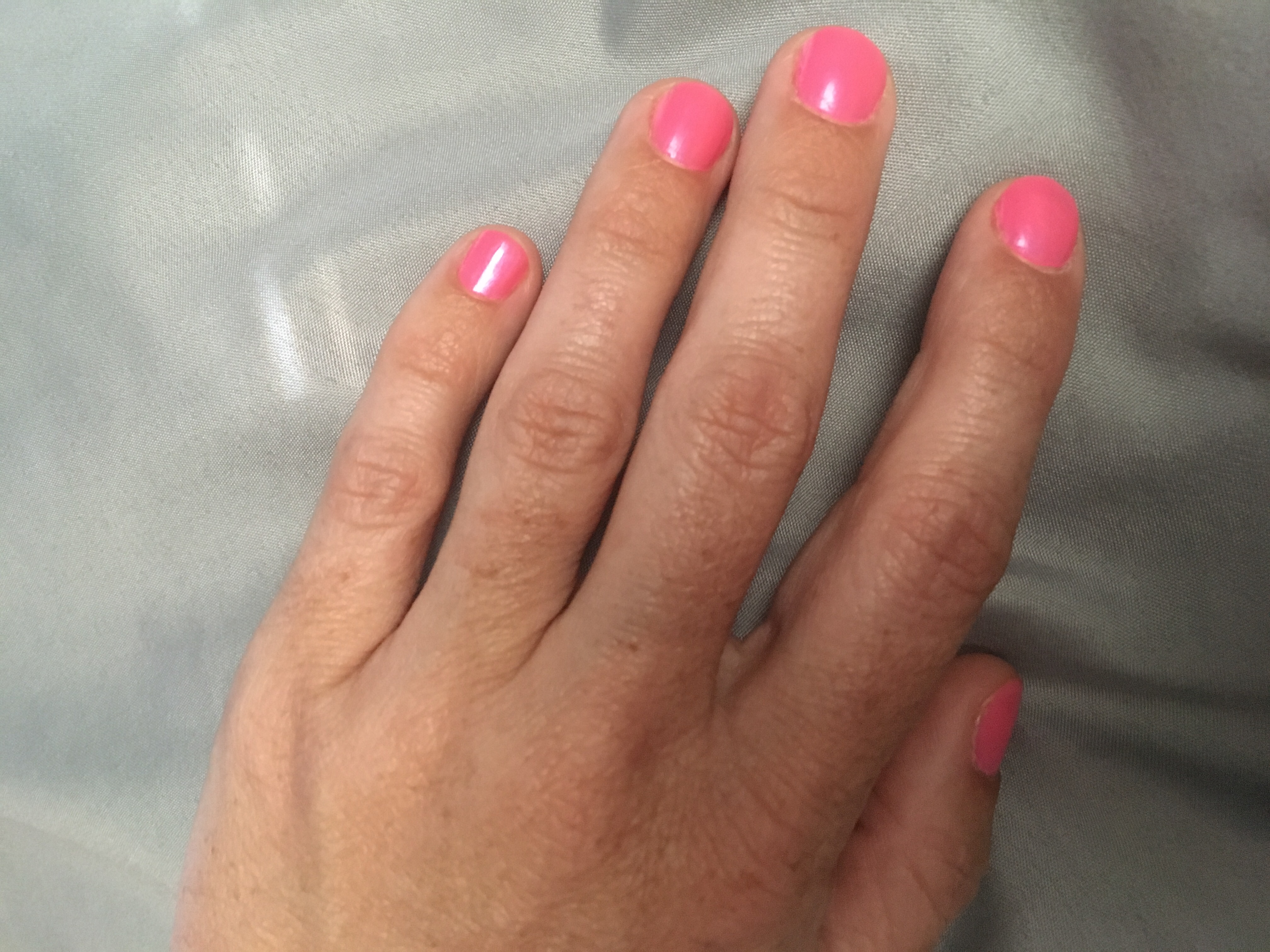
For as long as I can remember I have been a nail biter. I even have a picture somewhere that shows me biting my toenails. Before you begin to judge, I was only 2 years old. At that age it wasn’t gross to me. I will say it now, though… GROSS!!! And instead of my family stopping me, they only stopped to make it a Kodak moment. I am sitting there in some very tight fitting, 80’s styled toddler outfit, looking like some sort of chunky albino monkey chewing on my toes, bearing a huge grin on my face. Thanks mom or grandma, whomever is to blame for the evidence we now have of my intense nail biting. This habit was obviously a self-soothing method to cope with my nervousness. Instead of sucking my thumb, I found relief in chewing up my nails. I just recently discovered that this is something that people with BPD suffer from as well. (Article attached at the end of blog.) They are also classifying people that bite their nails habitually and harmfully as OCD, labeling these individuals as having a diagnosable mental disorder.
I have had several people give their best efforts to keep me from biting my nails, the jalapeno sauce on the fingernails, and one of my aunts went as far as even trying to bribe away my bad habit. She would say that if I could grow my nails she would pay me some hard, cold cash each time I would go to visit her with longer nails. I was unable to grow them at that age. Life for me at that time was far too nerve racking. I do feel that I learned to chew my nails during intense moments to help ease my anxiety. And then it became a horrible habit that until now I felt I was unable to break.
I can remember spending loads of money getting fake nails, and feeling better about myself almost the instant my nails were done. How does a little bit of powder, gel and polish change the way I feel about myself? I know that how we feel about ourselves on the outside can affect our mental state. It can cause serious issues. What could possibly be enhanced by fake nails? Why stop there, why fake lashes, fake breasts, fake tan, makeup even. Falsifying who we are on the outside to make ourselves feel better on the inside. Personally, the idea that I could apply beautiful nails hid the fact that I had a horrible habit of biting my nails. It also concealed my failure with my battle of being a nervous and insecure person. The fake nails hid those real parts of me. I loved fake nails, and I would even pick out the polish by the name… It had to match my mood or the persona I wanted to exude.
I am happy to announce that my addiction to fake nails has since been rehabilitated and I have beaten my nail biting nervous habit. I am now actually growing nails, and I can’t tell you how this small & unimportant physical feature actually empowers me. I feel like this is something I have battled since the age of 2. I had always felt that I wouldn’t be able to beat this habit. Making the once impossible idea of beating this bad habit, now very possible. The major change for me that has helped me beat this habits was first simply asking myself what it is I want? Giving myself time throughout the day to care for myself. Making my mind up to be more present, to be engaged more often and less time checked out. I could spend hours adrift in my thoughts, before practicing mindfulness. I check in with reality a lot more regularly now. Being more intentional with my actions, and with the way I want to treat myself and others. I don’t live in a fantasy world, and I know I create what is happening in my life, and that I am in control of what happens with my body. Starting with growing long, beautiful nails. This is just the beginning of being 100 % real.
Now if I could just kick my habit of Snapchat filters… I would be all real all the time. LOL!
Happy Mother’s Day to all the super hero moms out there that do their very best for their kids! Every day isn’t always easy, but they are all definitely worth it.
The article above explains why repeated exposure to places, or events may help us manage our intense and anxiety-ridden feelings about those situations in a more confident manner. This article supports the idea that allowing something to become habitual makes it a less stressful event. The thing that most people do when met with a situation that creates a feeling of anxiousness or fear is to avoid it, so the feeling of vulnerability doesn’t overwhelm their senses. Science says that one way to beat it, is to expose yourself to it, repeatedly.
I can remember being an elementary student that feared speaking at all, much less speaking in front of a classroom full of kids… I believed that this role took a very courageous individual. I felt like all of my teachers must have been superheroes. To be so confident, all were able to speak so freely and with so much authority.
I felt at that age, I would never be able to speak in front of people; however, I grew up. I had to take speech, sing in choir, and do some news anchor intern stuff for a college class.
Eventually, after some time, I was the person standing in front of the classroom speaking to all of those kids. The crazy thing here is… I still feel like that elementary student at times when I am asked to speak in front of the same amount of adults. I know where this fear stems from and I also know that I have the ability to overcome this fear. I will overcome this fear with more exposure. Just remember ANXIETY is a feeling of worry, nervousness, or unease, typically about an imminent event or something with an uncertain outcome. We control so many other feelings, why do we let anxiety control us? Consider this anxious feeling I have about public speaking being comparable to paralyzing stage fright.
There are several things that we may be asked to do throughout our day that could awaken overwhelming anxiety. After all, anxiety is an emotion. We can handle the emotions that bring about good feelings, and in life we learn to avoid those that bring about bad feelings. The trick here is to learn what causes theses overwhelming emotions, be present when you are feeling them, and if need be take your mental focus to something in the situation externally that is more pleasant than what you are feeling internally.
I know that being bitten by a poisonous snake is something I have always feared. I don’t imagine I will go handle snakes over and over until I am milking a viper.
This fear doesn’t halt my everyday existence. I know that each time I take a hike up a mountain or through high grass in a field someplace there is a chance that I will come into contact with a snake. It doesn’t control my actions, I have a healthy fear of snakes. There are those that are controlled by the emotional leash of anxiety. This emotional leash of anxiety is one you can choose on how you would like to respond. It shouldn’t stop you from living. Don’t become the pet on the end of the leash of anxiety. We should remind ourselves that we are the owner. The one in charge. Thoughts and emotions shouldn’t paralyze us, ever. Everything is always so much more aesthetic in theory and so much easier to say than to act on. As I write this, I know how hard it will be to practice. One step at a time, I don’t plan on jumping into a pit of snakes anytime soon.
Use your time to practice controlling that emotion. If we can release the control it has over us by exposing ourselves to the things that limit our everyday existence. Imagine all of the confidence gained from growing through the intense emotional control. Be over anxiety, by allowing the feeling to pass. Practice this and very little will be able to stop you.
Do you struggle with anxiety? What are things that has halted you in your steps? Have you ever tried to immerse yourself into that feeling to see how long it took for the feeling to go away? I am asking for a friend.










 Eventually, after some time, I was the person standing in front of the classroom speaking to all of those kids. The crazy thing here is… I still feel like that elementary student at times when I am asked to speak in front of the same amount of adults. I know where this fear stems from and I also know that I have the ability to overcome this fear. I will overcome this fear with more exposure. Just remember ANXIETY is a feeling of worry, nervousness, or unease, typically about an imminent event or something with an uncertain outcome. We control so many other feelings, why do we let anxiety control us? Consider this anxious feeling I have about public speaking being comparable to paralyzing stage fright.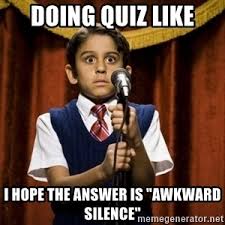

 The World in Black and White
You must be logged in to post a comment.